On June 5, 2026 Google added a page to Search Central titled “Google Search's guidance on using third-party SEO tools, services, and advice.” It is short. It reads like it was written by someone who had been asked “but the tool says” one too many times.
The sentences that matter
On data:
Third-party tools don't have access to our internal ranking data.
On promises:
They can't guarantee performance. Any predictions are their own and like predictions generally, may not happen.
On the newer acronyms:
Some services make promises about improving results for “AEO” or “GEO” tools without official Google endorsement.
And:
Google doesn't evaluate third-party services, so be wary of such claims and those making them.
On what to use instead:
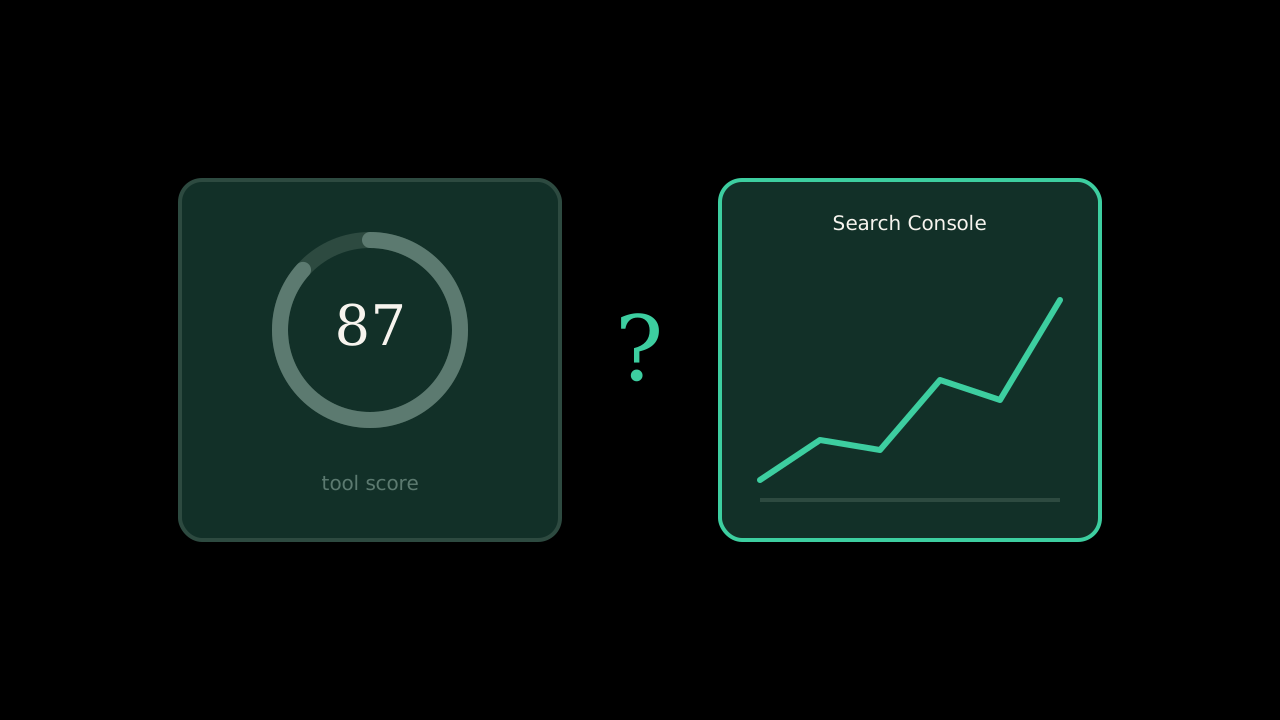
We strongly encourage using our first-party tool, Google Search Console, which provides you with key information and data directly from Google Search itself.
What this does not say
It does not say tools are useless. A crawler that finds your broken links is doing something real. A rank tracker that tells you where you appear for a query is reporting an observation, and observations are fine.
What it says is that a tool's score is not Google's score. When a dashboard shows a “domain authority” of 23 or an “SEO health” of 87, that number was invented by the tool's authors from signals they can see. It correlates with things Google cares about to some degree, and nobody outside Google can tell you how much. The page is Google declining, in writing, to bless any of it.
How I read a tool now
I split every tool output into two piles.
Observations. This page returns a 404. This title is 71 characters. This URL is not in the sitemap. Googlebot fetched this page yesterday. These are facts about my site or about Google's visible behavior, and I act on them.
Scores and predictions. Authority, difficulty, health, “AI visibility,” estimated traffic. These go in the second pile. I look at them the way I look at a weather app's ten-day forecast. Sometimes interesting, never a basis for a decision on their own.
The test for which pile something belongs in is the one the page gives for advice generally: good advice either qualifies itself as opinion based on data or experience, or cites official Google guidance. A score that cannot tell you which of those it is has told you which of those it is.
Search Console is the only first-party number
For a small site this is freeing. Search Console shows impressions, clicks, positions, which pages are indexed and why not, and since August, impressions inside AI Overviews and AI Mode. All of it comes from Google's logs, not from a model of Google.
Everything on this site's SEO has been done against that report and Google's documentation. The title link setup, the canonical host decision, the sitemap fields. None of it needed a score. It needed the document that said what Google does and the report that shows what Google did.
The AEO and GEO line, specifically
Pitches for generative engine optimization are everywhere now. Google's page names the acronyms and says the same thing it says about everything else: no endorsement, no evaluation, be wary. That does not make the practice fake. Being cited in an AI answer is real and measurable. It means nobody selling it has inside knowledge, and anyone claiming to has told you something about themselves.
The page on AI features says the same thing from the other direction: there is nothing special to add. I covered that in Google says AI Overviews need no special markup. Between the two documents, Google has drawn the boundary fairly clearly. Inside it is your content and your Search Console. Outside it is everyone's opinion, including this one.
Source: Google Search Central, “Google Search's guidance on using third-party SEO tools, services, and advice,” June 5, 2026.